Hutchison Effect history is crowded with names, videos, interviews, and government-interest stories. The archive separates three different questions: who is named, what document or media item preserves the name, and whether that source independently verifies the physical claim.
Named people in the strongest source trail
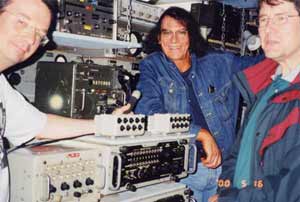
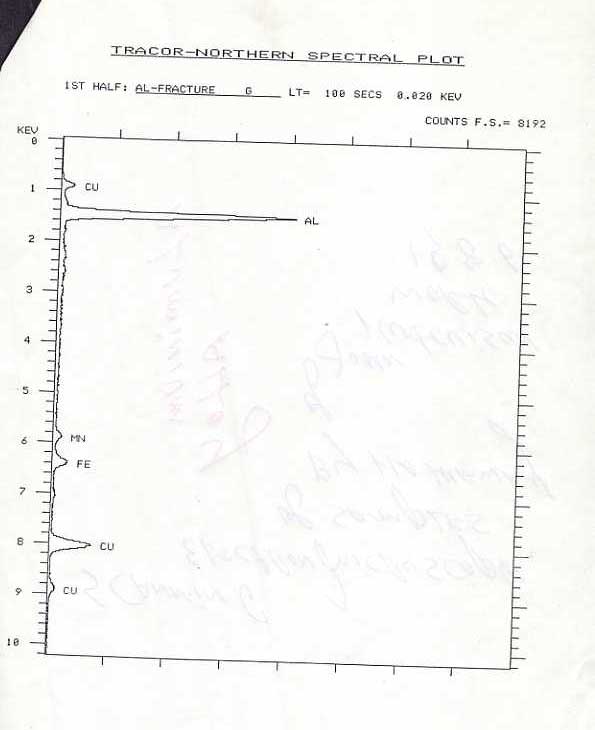
The ESJ and LADS source trail names John Hutchison, George D. Hathaway, Alexis Pezarro, Mel Winfield, and Jeane Manning in the early narrative around the effect. Hathaway is especially important because he appears in technical descriptions, LADS material, sample discussions, and later media commentary. These names help map the human network, but they do not automatically establish that the effects occurred under controlled conditions.
Government-interest records versus government-interest stories
The archive contains scans of U.S. Army correspondence. A March 1, 1991 INSCOM FOIA/Privacy Office letter references Hutchison's 1990 letter and a classified report, and an October 8, 1991 Army Materiel Command letter responds to Hutchison about referral options. A separate October 21, 1999 INSCOM FOIA response concerns a request about the "Hutchinson Effect."
Source status: Letter scans. These scans show that correspondence existed in the archive. They do not prove a successful demonstration, a military adoption program, a cover-up, or a seizure.
Broader stories involving McKinnon, government suppression, Canadian seizure, Los Alamos, or official agents should be treated as claims until tied to primary records: case numbers, agency files, court orders, police reports, or contemporaneous press.
Video and audio indexes
The official and semi-official web pages catalog audio, Dailymotion, YouTube, and hosted video links. APEC's Hutchison Effect index adds a later media map: interviews with John Hutchison, technical interviews, George Hathaway metal jellification material, original 1980s footage, and remastered footage. The local media-provenance table also tracks later Odysee, Rumble, Patreon, 3Speak, and StemGeeks references to long-form or rare footage.
Source status: Media leads. A video title or upload page is useful metadata, but it usually does not answer who filmed the run, whether the camera orientation is continuous, where the object started, whether off-camera supports were excluded, or how failed attempts were logged.
Suppression and raid claims
Self-published Rense/Geocities material claims a 1990 seizure and a March 17, 2000 apartment raid. The archive logs those reports as allegations. They are historically relevant because they shaped the public lore, but they should not be upgraded until primary court, police, or contemporaneous newspaper records are found.
| Evidence type | What it supports | What it does not prove |
|---|---|---|
| Named observers | A social and research network existed around the claims. | Controlled physical validation. |
| FOIA letter scans | Correspondence and official indexing requests existed. | Military confirmation of the effect. |
| Video indexes | Media items were circulated and cataloged. | Original tape custody or camera-trick exclusion. |
| Raid reports | Self-published allegations circulated in 2000. | Legal findings or police-record confirmation. |
Sources used on this page
The Hutchison Effect Apparatus, Electric Spacecraft Journal issue 8/9
First-hand apparatus description attributed to John Hutchison, with figures for coils, transformers, Van de Graaff devices, toroids, monitors, and metal samples.
The Hutchison Effect - A Lift and Disruption System
George D. Hathaway narrative describing Pharos Technologies, claimed propulsive and disruption categories, and early promotion of LADS.
Hutchison letters and FOIA correspondence, semi-official document scans
Includes U.S. Army INSCOM and Army Materiel Command correspondence dated March 1, 1991 and October 8, 1991; chain of custody remains self-published.
Hutchison Effect FOIA from Brian Allan, semi-official document scan
Includes an INSCOM FOIA response dated October 21, 1999 about a request concerning the Hutchinson Effect.
Videos page, hutchisoneffect.com
Self-published video index. It catalogs media leads but does not by itself establish filming date, chain of custody, or test controls.
Hutchison Effect, Alternative Propulsion Engineering Conference
Tim Ventura/APEC index of interviews, original-footage posts, remasters, and metal-jellification clips. Useful for media provenance leads.
Raid at gunpoint report
Self-published suppression/raid narrative. Use only as allegation until court, police, or contemporaneous press records are located.